



Push-Pull, Tension, and Other Types of Control Cables Available at Orscheln
Read More about Push-Pull, Tension, and Other Types of Control Cables Available at Orscheln
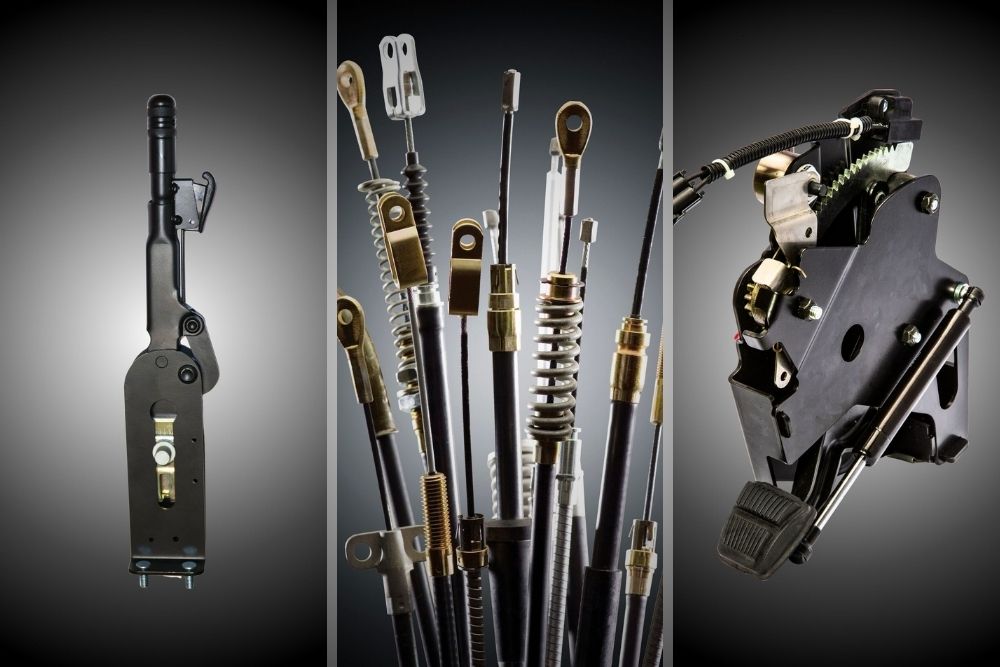
Orscheln develops mechanical control systems that connect operator input to vehicle or equipment functions through engineered controls, cables, and connection hardware. Standard and custom configurations support precise movement, flexible routing, and dependable operation. Customers can source individual components or collaborate with Orscheln on a coordinated solution built around their specifications.
Match operator controls with cables and connection hardware to transfer movement accurately across the vehicle or equipment.
Choose standard components or customize mounting, travel, and routing around the equipment layout and operating requirements.
Use engineering reviews, prototypes, and validation to confirm fit and performance before a custom design enters production.
Installation decisions affect the entire control path. Our engineers review mounting points, operator position, and the driven mechanism. We consider the route a cable follows through the equipment and how its end fittings connect to moving components. We also discuss future service access.
By evaluating these details before finalizing the design, we help OEM teams identify access and assembly requirements. This coordination supports a more practical installation plan for mechanical control systems.
Equipment programs may need different sourcing options as production volumes and service demands change. Orscheln works directly with OEMs on engineered controls and cable assemblies.
For eligible replacement or lower-volume cables, our F.A.S.T. distributor network offers another way to source assembled components. We can help identify whether a standard product, custom assembly, or distributor-supported cable best fits the application’s requirements and anticipated purchasing needs.
Control cables
Mechanical transmission shifters
Park brake levers
Park brake cables
Throttle controls
Valve controls
Control heads
Connection kits and hardware
Transmission shifting
Parking brake operation
Throttle actuation
Valve operation
Auxiliary equipment control
On-highway vehicles
Off-highway equipment
Marine and defense platforms


Let’s chat about how we can work together. Our engineers are here to help!

Push-Pull, Tension, and Other Types of Control Cables Available at Orscheln
Read More about Push-Pull, Tension, and Other Types of Control Cables Available at Orscheln
Tension control cables
Read More about Tension control cables
Control Head Control Cables
Read More about Control Head Control Cables
Input
 Motion
Control
Input
Motion
Control
Input
Motion
Control
Input
Motion
Control
Mechanical control systems transfer motion or force from an operator input to a remote function. A hand lever, foot pedal, or shifter initiates movement. A cable or linkage carries that movement to the controlled component. These systems can support transmission shifting, throttle actuation, and park brake operation when direct rigid linkage is impractical.
Flexible routing helps engineers work around vehicle structures and other packaging constraints. The selected control, cable construction, and connection hardware must work together to provide the required travel and operating force.
A coordinated design can also simplify installation by defining how each component interfaces with the surrounding equipment. This alignment supports predictable control response throughout the system’s intended range of motion.
Yes, Orscheln can provide individual components or coordinate a complete assembly around the application. A system may combine control cable with an operator control and connection hardware. Engineers review travel, load, and routing before recommending an approach. They also evaluate mounting points and available space.
Standard product families may provide an efficient starting point, while custom development can address unique interfaces or operating conditions. Orscheln manufactures mechanical shifters, park brake controls, and several control cable families. This range allows OEM teams to source compatible components from one manufacturer, while receiving engineering support for the complete mechanical connection. It also reduces the need to coordinate separately sourced parts during integration.
The process begins with application details such as required motion, operating load, and available space. Connection points and routing further shape the design, while environmental conditions and duty cycle guide material decisions and protective features. Then, engineers can develop concepts, review packaging, and build prototypes for evaluation.
Validation may address fit, function, and durability. Customer-defined requirements can also guide the testing plan before production approval. Working with Orscheln helps customers coordinate design and manufacturing decisions early. This process can reveal interface or packaging concerns before production tooling and final assembly, when design changes may require more time and resources. Early feedback gives the team time to refine the design before release.
Most Orscheln mechanical control systems are proudly engineered and manufactured in the USA at our headquarters in Moberly, Missouri. Our U.S.-based team provides comprehensive engineering and customer support, while our facilities in the United Kingdom, India, and China serve the needs of local assistance to customers worldwide.
Mechanical control systems transmit operator movement through a cable or linkage to a remote mechanism. Electronic controls communicate commands through sensors and electrical signals. Orscheln manufactures products in both categories, including mechanical shifters and electronic shift-by-wire equipment.
A mechanical arrangement provides a physical connection between the input and the controlled component. An electronic design relies on compatible electrical architecture. The choice depends on how the equipment needs to operate and communicate. Our engineers discuss these requirements before you select a control method.
A typical mechanical transmission shift system uses a shift lever, a control cable, and a transmission connection kit. The operator moves the lever, and the cable transfers that motion to the transmission mechanism.
Orscheln offers T-handle and push-button-release shifter configurations for operator interfaces. Cable travel, mounting space, and the transmission connection all influence component selection. We review these details with your team and discuss whether our standard components suit the installation or whether we need an application-specific configuration.
Orscheln supplies hand-operated and foot-operated park brake levers, along with matching cable options. Depending on the selected design, customers can discuss mounting configurations, handle length, and locking features.
The lever and cable must connect correctly with the vehicle’s brake mechanism. Our team reviews operator access and the expected movement before recommending components. We also consider the cable’s operating conditions when discussing protective construction. See our park brake systems for more information about available designs.
Cable routing influences how efficiently mechanical movement reaches the controlled component. Cable length, bends, and mounting positions affect friction and the force available at the output. A route with tight bends might require further evaluation before choosing a cable.
Orscheln engineers review the proposed path with the operating load and required travel. Sharing layout drawings helps us understand where the cable must pass and how it will connect. Our mechanical control cable information explains additional construction options.
End fittings and mounting hardware connect the operator control, cable, and driven component. Rods, sleeves, and connection kits could also be part of an assembly, depending on its design. These elements must match the equipment’s mounting locations and intended motion.
Orscheln offers standard and custom fitting options across selected cable families. Our engineers can review drawings or existing parts to assess the needed interfaces. Connection details help teams evaluate fit without assuming hardware from unrelated systems is interchangeable.
Temperature, moisture, vibration, and repeated use can all affect control cable selection. Depending on the cable family, Orscheln offers polymer liners, protective jackets, corrosion-resistant fittings, and environmental seals. Core and conduit construction also influence flexibility and the forces a cable can transmit.
OEM teams should share the exposure and operating demands when discussing mechanical control systems. We can use those details alongside travel and load requirements to evaluate appropriate construction. Not every material or protective feature applies to every cable design.
Orscheln works with OEMs and Tier 1 suppliers on production requirements. Customers seeking replacement cable assemblies should contact us to discuss their application and identify sourcing options. We can review existing parts and information needed for a replacement.
When asking about a replacement, share an existing part number, drawing, or sample if available. Cable length, end fittings, and operating requirements help identify the necessary configuration. Product and assembly availability vary, so confirm details before ordering replacement components for your mechanical control systems.
